
In daily life, it’s inevitable that we’ll encounter various wounds, ranging from minor scrapes and cuts to more serious burns and ulcers. Wound care is not only about alleviating immediate pain and discomfort but also significantly impacts future recovery, such as the likelihood of scarring.
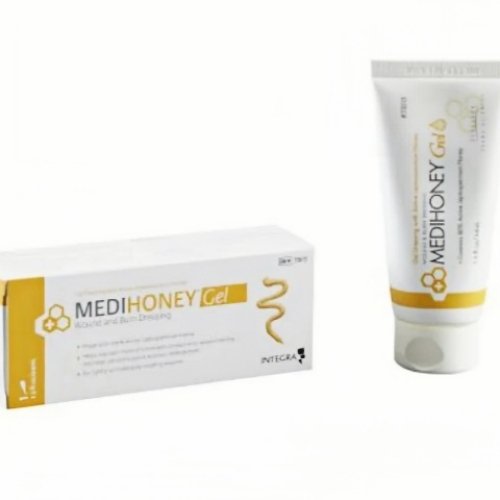
Today, we’ll take an in – depth look at a highly regarded wound care product, Medihoney, and explore why it stands out among numerous alternatives, offering a new hope for wound healing.
The Importance of Wound Care and Common Challenges
Incorrect wound care can easily lead to infections, prolong the healing process, and may even cause serious complications. Traditional wound care methods have several drawbacks:
- Disadvantages of natural scabbing: Allowing a wound to scab over naturally may seem like the body’s self – protection mechanism, but it can hinder new skin formation, extend the healing time, and increase the risk of scarring.
- Problems with traditional dressings: Frequent replacement of traditional dressings often causes great pain to patients due to adhesion between the dressing and new tissue, and may also cause secondary damage to the wound.
- Difficulty in maintaining the right environment: Maintaining an environment conducive to wound healing, such as appropriate humidity, is also a major challenge in wound care.
What is Medihoney
The professional Medihoney wound care product made from natural Active Leptospermum Honey. Sourced from New Zealand, Manuka honey is unique because it contains a special active ingredient, methylglyoxal (MGO), which endows it with powerful antibacterial properties.
Medihoney combines this precious honey with carefully selected excipients to create different formulations, such as gels and pastes, to meet the needs of various types of wounds.
How Does Medihoney Promote Wound Healing?
Powerful Antibacterial Effect
- Inhibiting bacterial growth: MGO in Manuka honey has strong antibacterial properties and can inhibit the growth of about 60 types of bacteria, including common ones like Staphylococcus aureus and Escherichia coli, which are often the main culprits of wound infections.
- Dual – action sterilization mechanism: When Medihoney is applied to a wound, the high osmotic pressure of the honey dehydrates bacterial cells, thus suppressing their growth and reproduction. When diluted by wound exudate, the honey releases hydrogen peroxide, further enhancing its antibacterial effect. Moreover, the concentration of this antibacterial solution is 1,000 times lower than the commonly used 3% hydrogen peroxide antiseptic solution, posing no harm to human skin fibroblasts. This allows it to effectively kill bacteria without damaging normal tissues.
Creating a Moist Healing Environment
- In line with modern concepts: Modern wound care concepts emphasize the importance of moist wound healing, and Medihoney perfectly fits this idea.
- Promoting tissue growth: It can keep the wound moist, providing an ideal environment for cell migration and proliferation, effectively doubling the growth rate of new tissues. In a moist environment, neutrophils, macrophages, and fibroblasts, which are essential for wound healing, can function optimally. These cells cannot grow well in a dry environment.
- Reducing scar formation: A moist environment prevents scabbing, facilitating the smooth crawling of epidermal cells on the wet surface and significantly reducing the probability of scar hyperplasia.
Activating the Immune Response
Medihoney can also activate the body’s immune response to infections, specifically manifested as follows:
- Promoting the proliferation of lymphocytes and monocytes;
- Releasing cytokines (such as INF -β, IL – 1, IL – 6) to help the body better cope with possible infections at the wound site and accelerate the healing process.
Advantages of Different Medihoney Formulations and Applicable Wound Types
MediHoney Gel
- Formulation characteristics: This gel – based Medihoney formulation contains natural gelling agents, giving it good stability and viscosity. Even in the face of body heat and wound exudate, it can remain at the wound site for an extended period, continuously exerting its effects.
- Scope of application: Suitable for various partial to full – thickness wounds, such as common surgical incisions, burns, and scrapes, especially for wounds with moderate to heavy exudate.
- Convenient observation: Its transparency also allows healthcare providers and patients to easily observe the wound healing process and make timely adjustments to the care plan.
MediHoney Paste
- Formulation characteristics: MediHoney Paste is a paste – like dressing made entirely from 100% Active Leptospermum Honey. It has a thick and malleable texture.
- Scope of application: It can penetrate into hard – to – reach wound areas, such as tunneling wounds, sinus wounds, and wounds with undermining. These complex wounds are often difficult to effectively cover and care for with traditional dressings. However, MediHoney Paste, with its unique texture, can fill the voids and crevices of the wound, ensuring that every part of the wound is exposed to the therapeutic effects of the product, thus promoting healing.
How to Use Medihoney Correctly
Clean the Wound
Before using Medihoney, it’s essential to ensure the wound is clean:
- Gently wash the wound with physiological saline or clean water to remove dirt, foreign objects, and residual secretions on the wound surface.
- For deeper or severely contaminated wounds, more thorough debridement may be required under a doctor’s guidance.
- Be careful to avoid causing secondary damage to the wound.
Apply or Cover with Medihoney
- MediHoney Gel: Use a sterile cotton swab or applicator to evenly apply an appropriate amount of the gel to the wound surface, ensuring complete coverage.
- MediHoney Paste: Use sterile tools to directly fill the paste – like dressing into the wound, especially for complex and deep – seated wounds. Try to ensure that the dressing fills all the voids and crevices.
Bandage and Fix
After applying or filling with Medihoney, choose a suitable sterile dressing to bandage and fix the wound according to its location and condition:
- The purpose of bandaging is to protect the wound from external bacteria and help keep the Medihoney in place so that it can continue to work.
- Do not bandage too tightly to avoid affecting blood circulation.
Replacement Frequency
The replacement frequency of Medihoney varies depending on factors such as the type of wound and the
…